




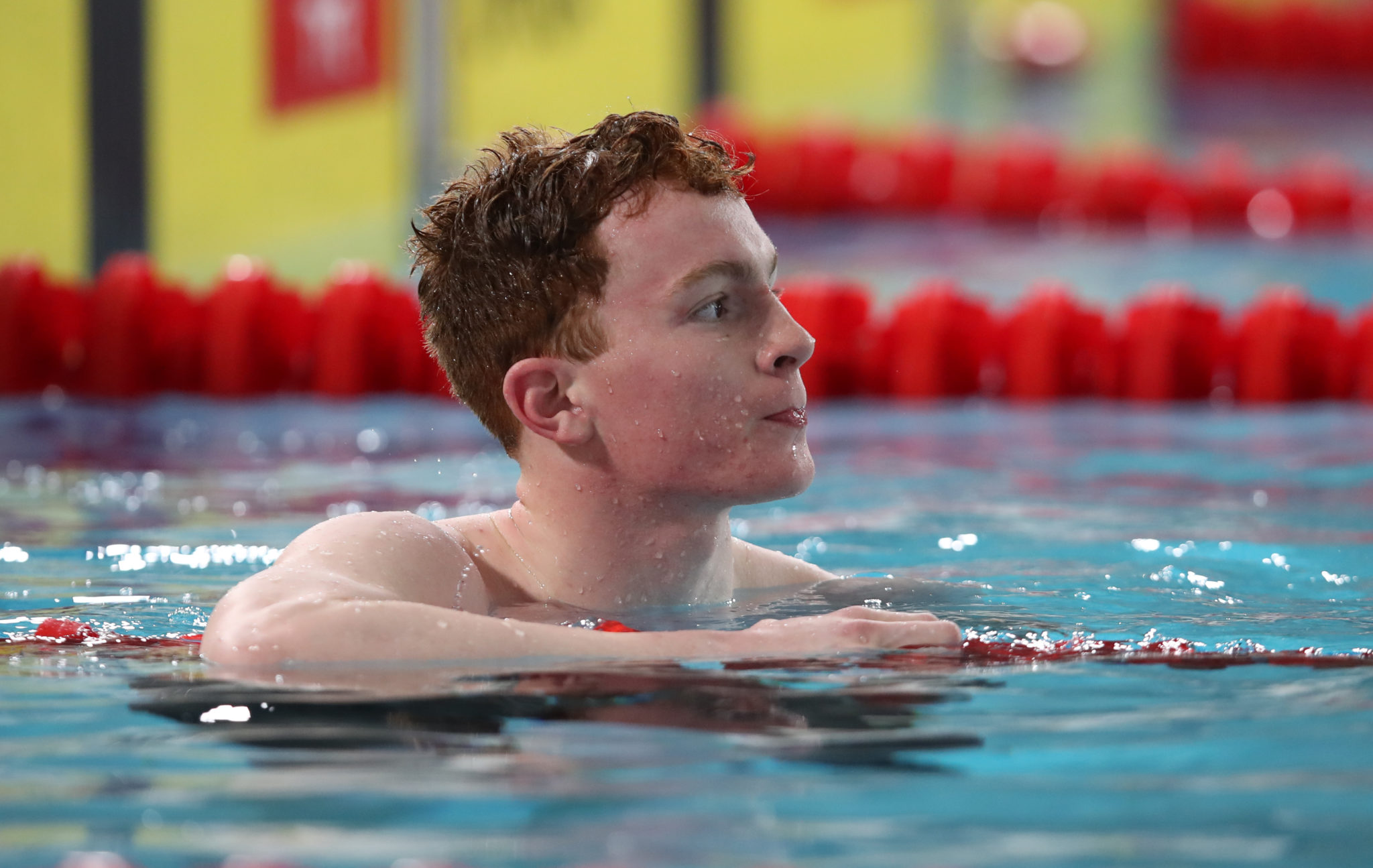
At just 24 years old, Archie Goodburn should be focused solely on chasing medals and breaking records. Instead, the champion swimmer is fighting a much bigger battle — living with a rare, inoperable form of brain cancer while campaigning for better support and treatment for others facing the same diagnosis.
“I grew up representing my country, and I want to see my country supporting me back,” he says.
Two years ago, everything changed. While preparing for the Paris Olympic qualifiers, Goodburn began experiencing strange episodes during training. What started as brief moments of weakness soon became increasingly alarming. He would lose strength, feel numbness down his left side, and experience overwhelming waves of fear and nausea.
“It felt like my consciousness was being pulled away from me,” he recalls.
In April 2024, he narrowly missed Olympic qualification by only a fraction of a second. Shortly afterward, doctors discovered the cause of his symptoms: three oligodendrogliomas, a rare type of brain tumour that accounts for only a small percentage of all brain cancer cases.
A breakthrough drug called Vorasidenib has since given Goodburn something he feared he might lose — time. The treatment delayed the need for chemotherapy and radiotherapy, allowing him to continue training, pursue his chemical engineering degree, and prepare for next month’s Commonwealth Games in Glasgow.
Yet he knows the treatment is not a cure.
“Vorasidenib only bought me four years, according to the trials. I need more,” he says. “And I’m not going to stop campaigning until my last breath.”
His frustration reflects a wider issue. Despite brain cancer being the leading cancer killer of children and adults under 40, it has received only a tiny share of government cancer research funding over the past two decades. Progress in developing new treatments remains painfully slow.
According to Goodburn, the problem is not a lack of scientific research. Instead, many promising discoveries fail to reach patients because they become trapped between laboratory research and clinical trials. This gap, often referred to as the “valley of death,” has been highlighted by campaigners and parliamentarians as a major barrier to developing life-saving treatments.
Funding challenges only add to the problem. Although £40 million was pledged by the government for brain cancer research in 2018, only a small portion of that money has been spent due to regulatory and structural obstacles.
Through the Brain Cancer Justice campaign, Goodburn is urging the government to release the remaining funds and ensure they reach frontline researchers. The campaign is also calling for a dedicated government lead on brain cancer, greater access to genome sequencing for patients, and a “right to try” policy that would allow patients access to potentially life-saving treatments still undergoing evaluation.
The Department of Health and Social Care has acknowledged that more must be done to support brain tumour research and improve patient access to innovative medicines.
For Goodburn, the importance of new treatments is deeply personal. Without Vorasidenib, he would have started radiotherapy and chemotherapy in July last year. Instead, the drug has helped control the proteins that fuel the growth of his tumours.
Its journey to patients was not straightforward. Initially, the National Institute for Health and Care Excellence (NICE) recommended against making the treatment available through the NHS. Following strong campaigning from the brain cancer community, including Goodburn himself, that decision was eventually reversed, and the drug became available to UK patients earlier this year.
The impact on his life was almost immediate. Soon after beginning treatment, Goodburn broke the Scottish record in the 50-metre breaststroke — the very event he will compete in at the Commonwealth Games.
For him, the achievement was proof that access to innovative treatments can transform lives.
“There’s that much space for change,” he says. “Change is so possible.”
As a child, Goodburn watched the 2014 Commonwealth Games in Glasgow and dreamed of one day competing there himself. Now, he is preparing to walk into the arena as an athlete. Yet he admits another challenge feels just as daunting — watching Members of Parliament debate the petition that he and Brain Cancer Justice spent months gathering support for.
Balancing elite sport with campaigning has not been easy, but he remains determined to keep pushing for change.
“I campaign because of the disparity in care and the lack of funding,” he says. “But also because I believe that what I’m doing can make a difference to my own future.”
Then he pauses before adding a final thought that captures the heart of his mission:
“In some ways, campaigning is a treatment of its own.”