
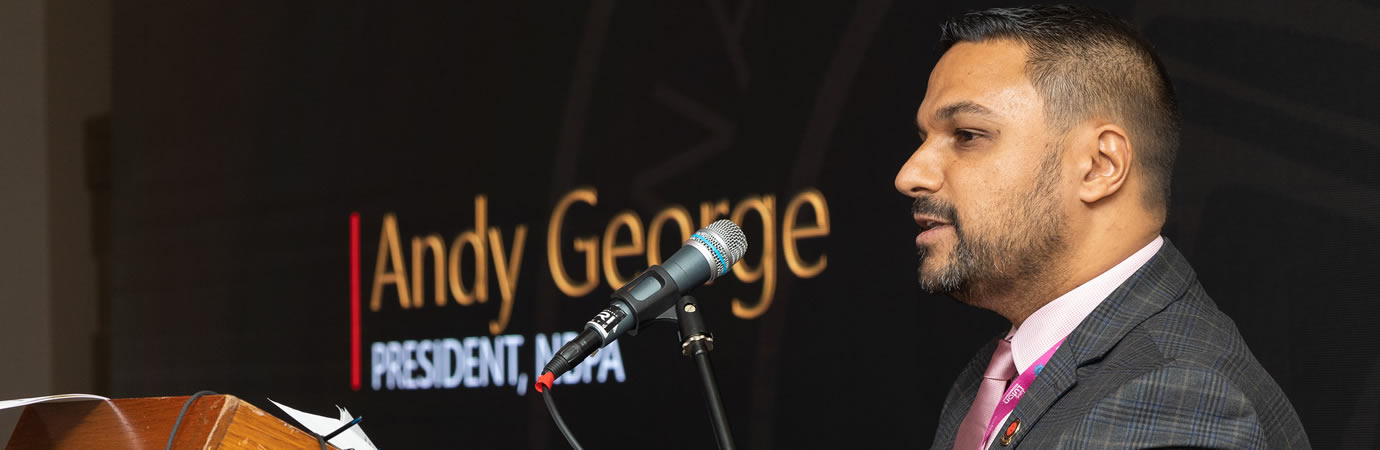
The head of the National Black Police Association (NPBA), Andy George, has expressed concerns that police forces may be rushing into changes to anti-racism policies following the murder of 18-year-old student Henry Nowak. George, who serves as a chief inspector with the Police Service of Northern Ireland, believes that any revisions made before investigations are completed risk being poorly considered and driven by public pressure rather than evidence.
His comments come amid growing debate about policing practices after the tragic death of Nowak. The student was fatally attacked by Vickrum Digwa, who was later sentenced to life imprisonment with a minimum term of 21 years. During the incident, Digwa falsely accused Nowak of racially abusing him, leading officers to arrest the teenager while he was critically injured. The police response has since come under investigation by the Independent Office for Police Conduct (IOPC).
The case has reignited discussions around race and fairness in policing, particularly regarding a National Police Chiefs’ Council (NPCC) anti-racism commitment. The guidance states that achieving racial equality does not necessarily mean treating everyone in exactly the same way or adopting a colour-blind approach. Critics have argued that such policies may contribute to unequal treatment, prompting the NPCC to review the wording. The review has received support from both the Home Secretary and Prime Minister Sir Keir Starmer.
George, however, believes the speed of the proposed changes suggests a reaction to public sentiment rather than a carefully considered response. He pointed out that concerns raised by Black communities and Black police officers have historically taken much longer to receive attention, making the current urgency appear inconsistent. In his view, lessons should be drawn from the outcome of the watchdog’s investigation before significant policy changes are introduced.
Some serving police officers have echoed these concerns. A Black officer who spoke anonymously urged people to wait for the evidence before reaching conclusions, warning that decisions made in the heat of the moment could have unintended consequences. Another officer of South Asian heritage described being deeply saddened by Nowak’s death but stressed that most officers are committed to treating everyone fairly. At the same time, he noted that anti-racism training has left some officers feeling anxious about making mistakes, particularly when dealing with race-related incidents.
The debate has also drawn in former Home Secretary Jack Straw, who oversaw policing reforms following the publication of the Macpherson Report into the murder of Stephen Lawrence. While acknowledging that serious problems existed within policing at the time, Straw suggested that some reforms may have gone too far in the opposite direction. He argued that race-related guidance should be reviewed carefully and that policing should avoid being overly influenced by pressure groups.
Others disagree. Baroness Kishwer Falkner, former chair of the Equality and Human Rights Commission, rejected the idea that policing has over-corrected but acknowledged that some members of the public now perceive the system as unfair. She criticised what she described as “virtue signalling” within public institutions and argued that unconscious bias training should be abandoned because, in her view, there is little evidence that it is effective.
Baroness Doreen Lawrence, whose son Stephen Lawrence’s murder became a landmark case in British policing, also commented on the issue. Offering her condolences to the Nowak family, she said the circumstances surrounding Henry’s treatment by police should never have occurred and suggested officers must be held accountable for their actions on the night.
The case has become a focal point in wider political debates. Reform UK leader Nigel Farage called for public anger over the incident, while Prime Minister Starmer accused him of exploiting the tragedy to deepen divisions. Following Digwa’s sentencing, protests near the scene of the stabbing turned violent, leaving several police officers injured and resulting in criminal charges against two individuals.
Despite the growing controversy, Henry Nowak’s father, Mark, has appealed for unity. While describing it as heartbreaking to witness how his son was treated in his final moments, he urged people not to use Henry’s death to fuel further hatred, division, or social tension. Hampshire Police Chief Constable Alexis Boon has since issued an apology to the Nowak family, acknowledging the distress caused by the police response.