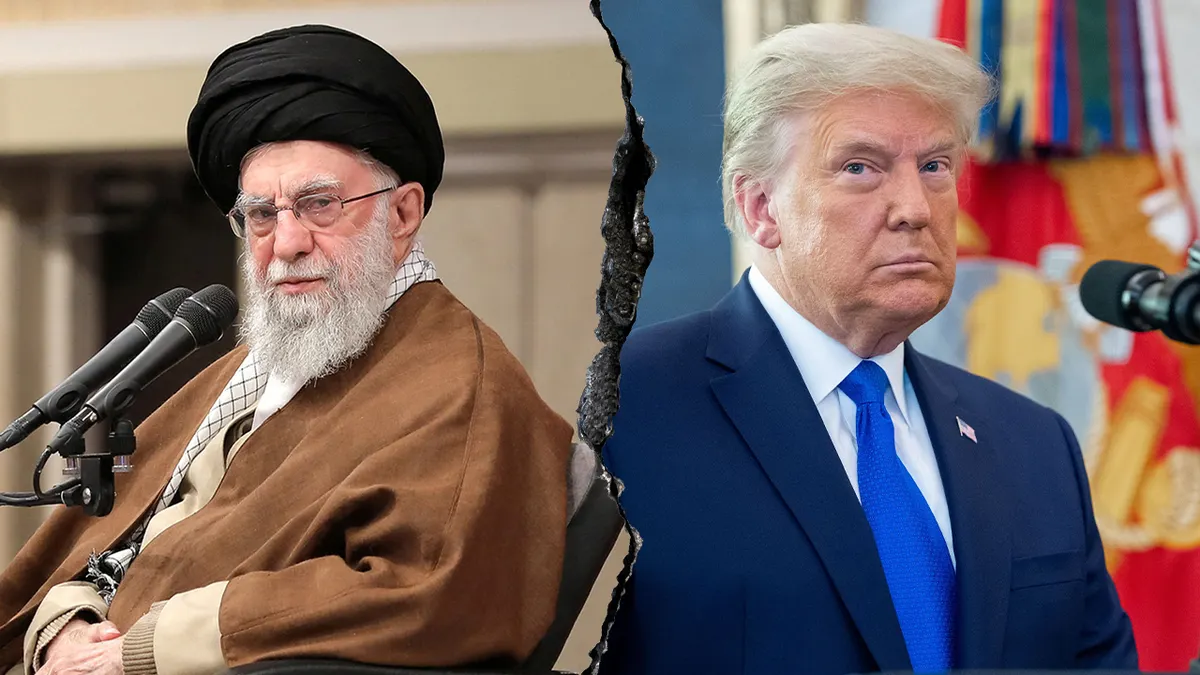
The White House has released the full text of a landmark Memorandum of Understanding (MoU) between the United States and Iran, outlining a comprehensive framework designed to end ongoing hostilities, ease regional tensions, revive economic cooperation, and pave the way for a final peace agreement within the next 60 days.
The agreement, described as a major diplomatic breakthrough, includes commitments from both nations to immediately and permanently cease military operations, respect each other’s sovereignty, and pursue a long-term settlement through negotiations.
Key Highlights of the Agreement
Permanent End to Military Hostilities
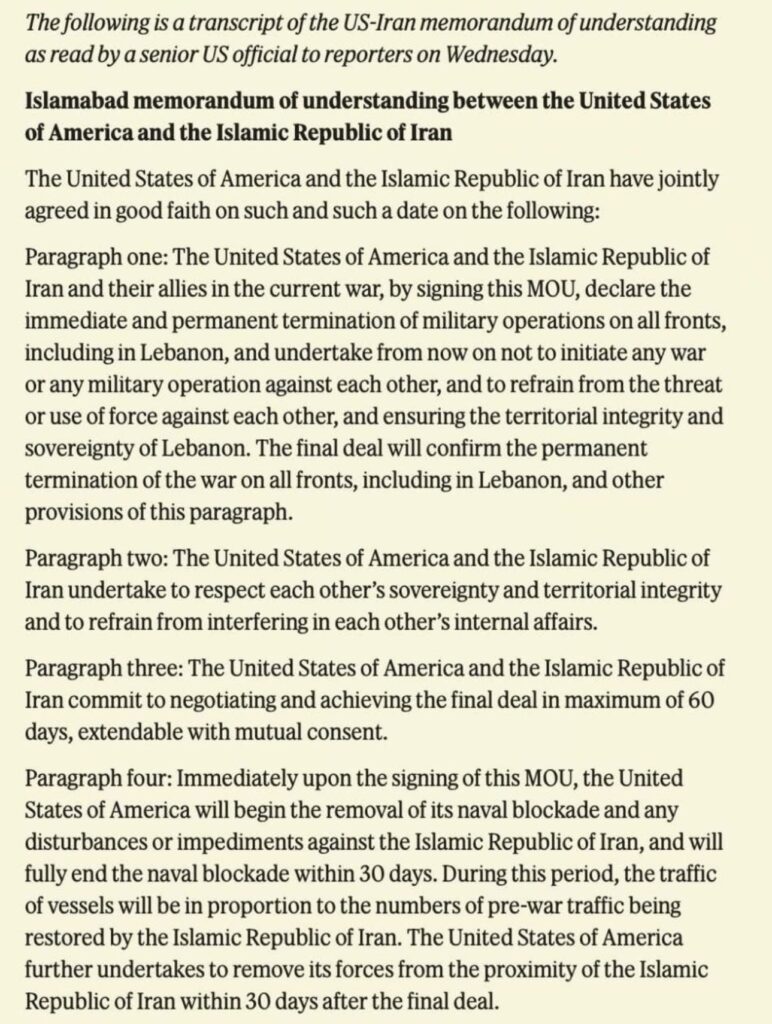
The United States and Iran, along with their respective allies involved in the current conflict, have agreed to immediately and permanently halt all military operations across all fronts, including Lebanon. Both sides pledged not to initiate future military actions against one another and to refrain from any threats or use of force. The agreement also emphasizes the protection of Lebanon’s sovereignty and territorial integrity.
Mutual Respect for Sovereignty
Both countries committed to respecting each other’s territorial integrity and political independence while refraining from interference in domestic affairs.
60-Day Timeline for a Final Peace Deal
Negotiators from both sides will work toward a comprehensive final agreement within 60 days, with the option of extending talks through mutual consent.
Easing of U.S. Military and Maritime Restrictions
Under the MoU, the United States will begin lifting its naval blockade and removing obstacles affecting Iran’s maritime activities. The blockade is expected to be fully removed within 30 days. The U.S. has also committed to withdrawing military forces from areas near Iran within 30 days after a final agreement is reached.
Restoration of Commercial Shipping Routes
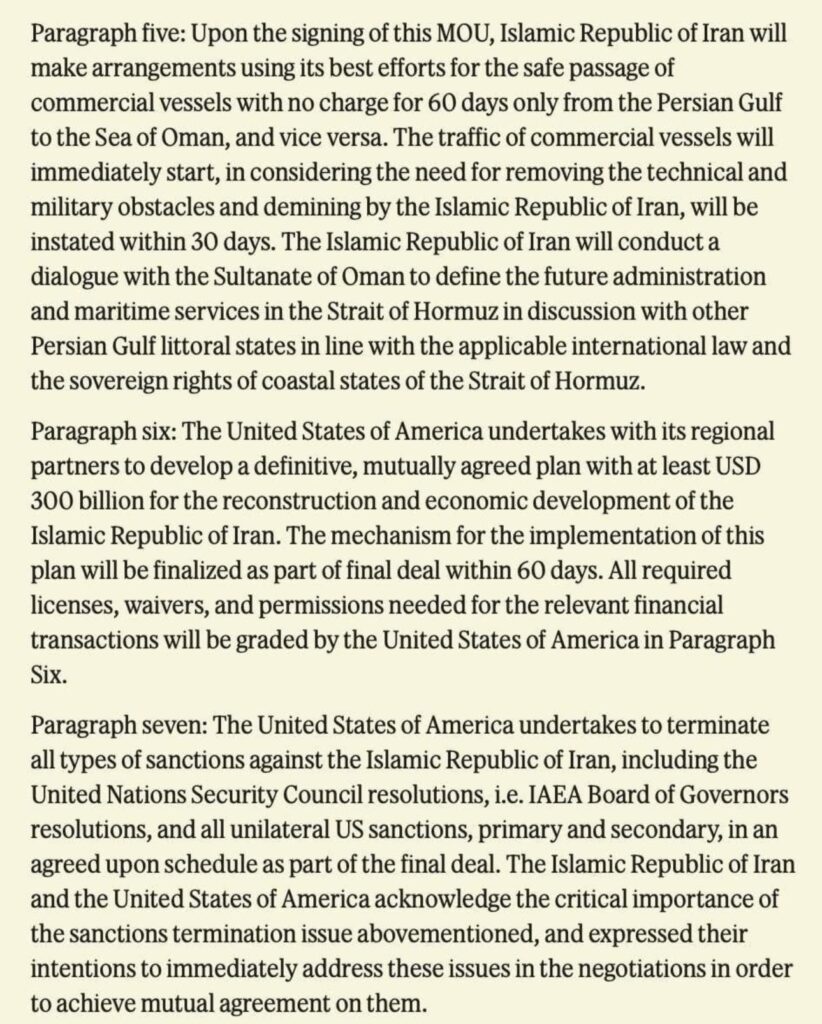
Iran has agreed to facilitate the safe passage of commercial vessels between the Persian Gulf and the Sea of Oman free of charge for 60 days. Commercial traffic is expected to resume immediately, with full restoration targeted within 30 days following demining operations and the removal of technical and military barriers.
Iran will also begin discussions with Oman and other Gulf states regarding the future management and maritime services of the Strait of Hormuz in accordance with international law.
Massive Reconstruction and Economic Development Package
The United States, together with regional partners, pledged to support a reconstruction and economic development plan worth at least $300 billion for Iran. The initiative would form part of the final agreement and include all necessary licenses, waivers, and permissions to facilitate implementation.
Sanctions Relief
The MoU outlines a commitment by the United States to terminate sanctions against Iran through an agreed timetable as part of the final settlement. This includes U.S. primary and secondary sanctions, as well as efforts related to international resolutions affecting Iran.
Nuclear Commitments
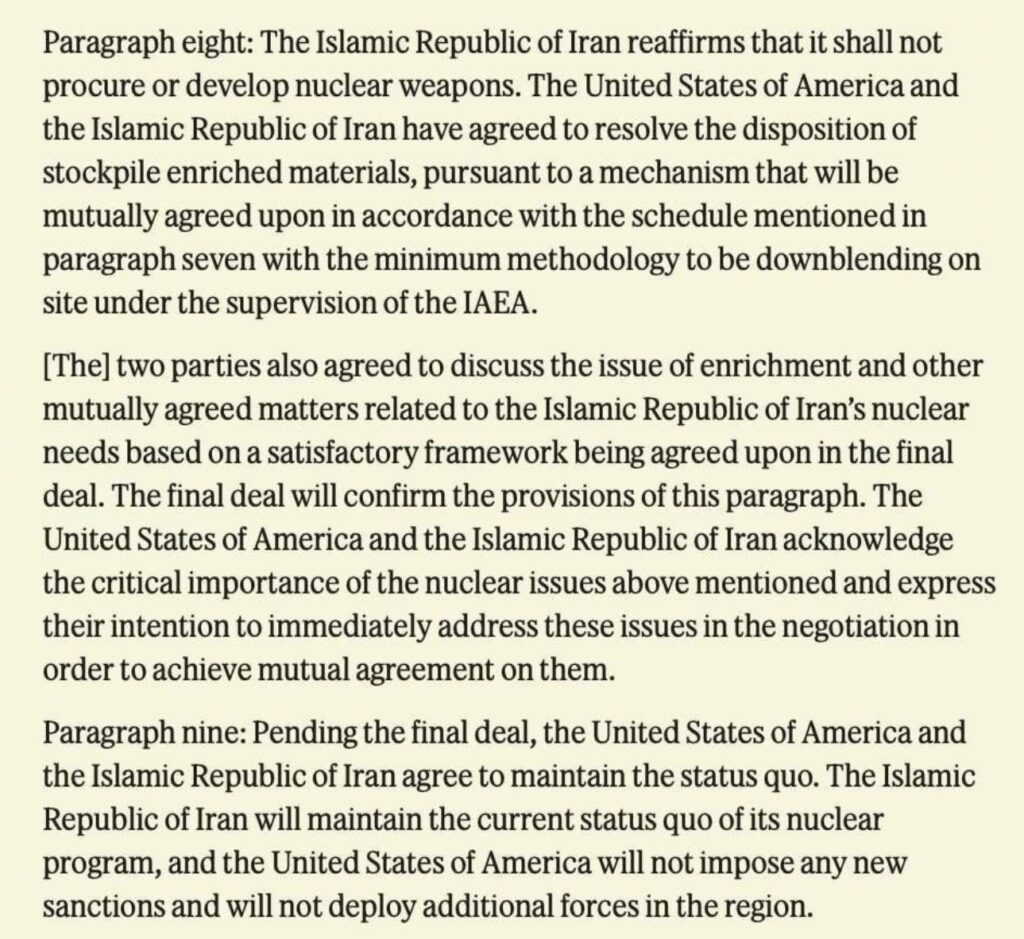
Iran reaffirmed that it will not seek to develop or acquire nuclear weapons. Both countries agreed to negotiate the future handling of Iran’s enriched nuclear materials, including potential downblending under the supervision of the International Atomic Energy Agency (IAEA). Additional discussions will address uranium enrichment and Iran’s civilian nuclear requirements.
Maintaining the Status Quo During Negotiations
While negotiations continue, Iran will maintain its current nuclear program without expansion, while the United States will refrain from imposing new sanctions or deploying additional military forces to the region.
Oil Exports and Financial Access Restored
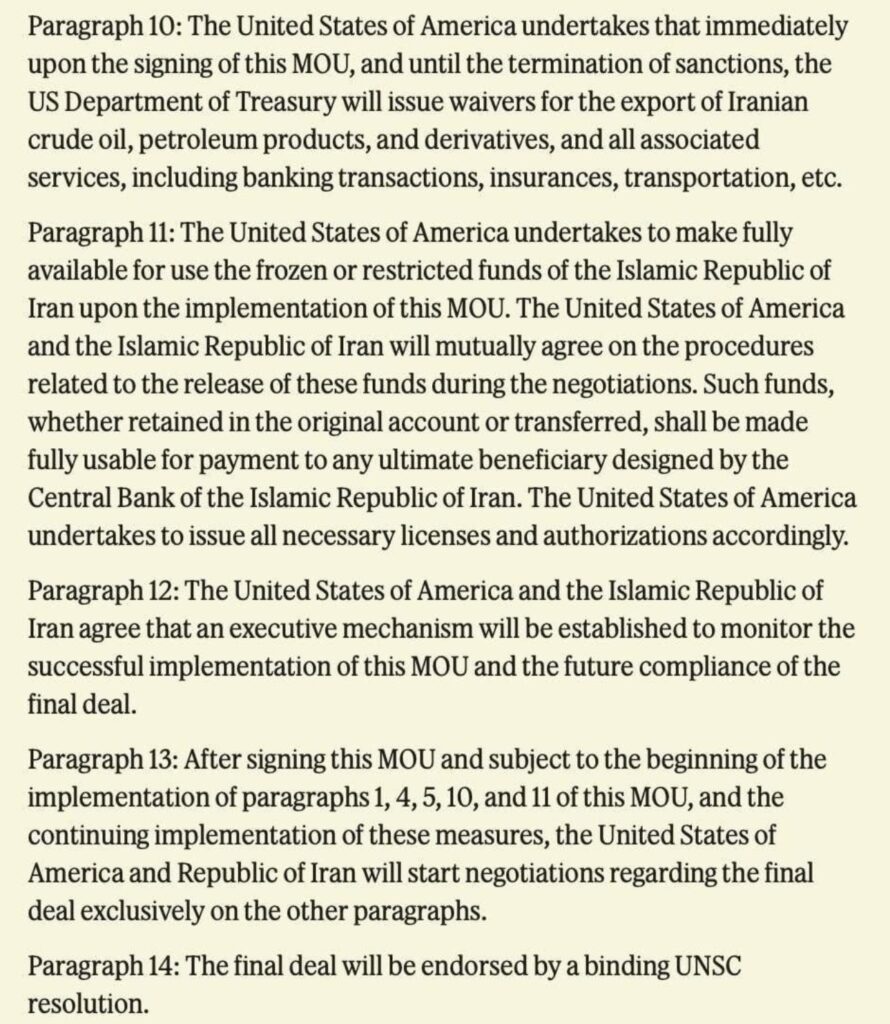
Immediately upon implementation of the MoU, waivers will be issued to allow Iranian crude oil exports, petroleum products, and related services, including banking, insurance, and transportation activities.
The agreement also provides for the release and restoration of access to frozen or restricted Iranian funds, with detailed procedures to be determined during negotiations.
Monitoring and Verification
A joint monitoring mechanism will be established to oversee implementation of the MoU and any subsequent final agreement.
Path Toward a UN-Endorsed Settlement
Formal negotiations on the final agreement will begin once key provisions of the MoU are implemented. The completed agreement is expected to receive endorsement through a United Nations Security Council resolution.
A Potential Turning Point
If fully implemented, the memorandum could mark one of the most significant diplomatic developments between the United States and Iran in decades. The agreement not only seeks to end military confrontation but also opens the door to economic recovery, regional stability, and renewed international engagement.
Officials from both sides have yet to comment on the timeline for implementation, but the release of the full text signals a major step toward what could become a historic peace settlement.