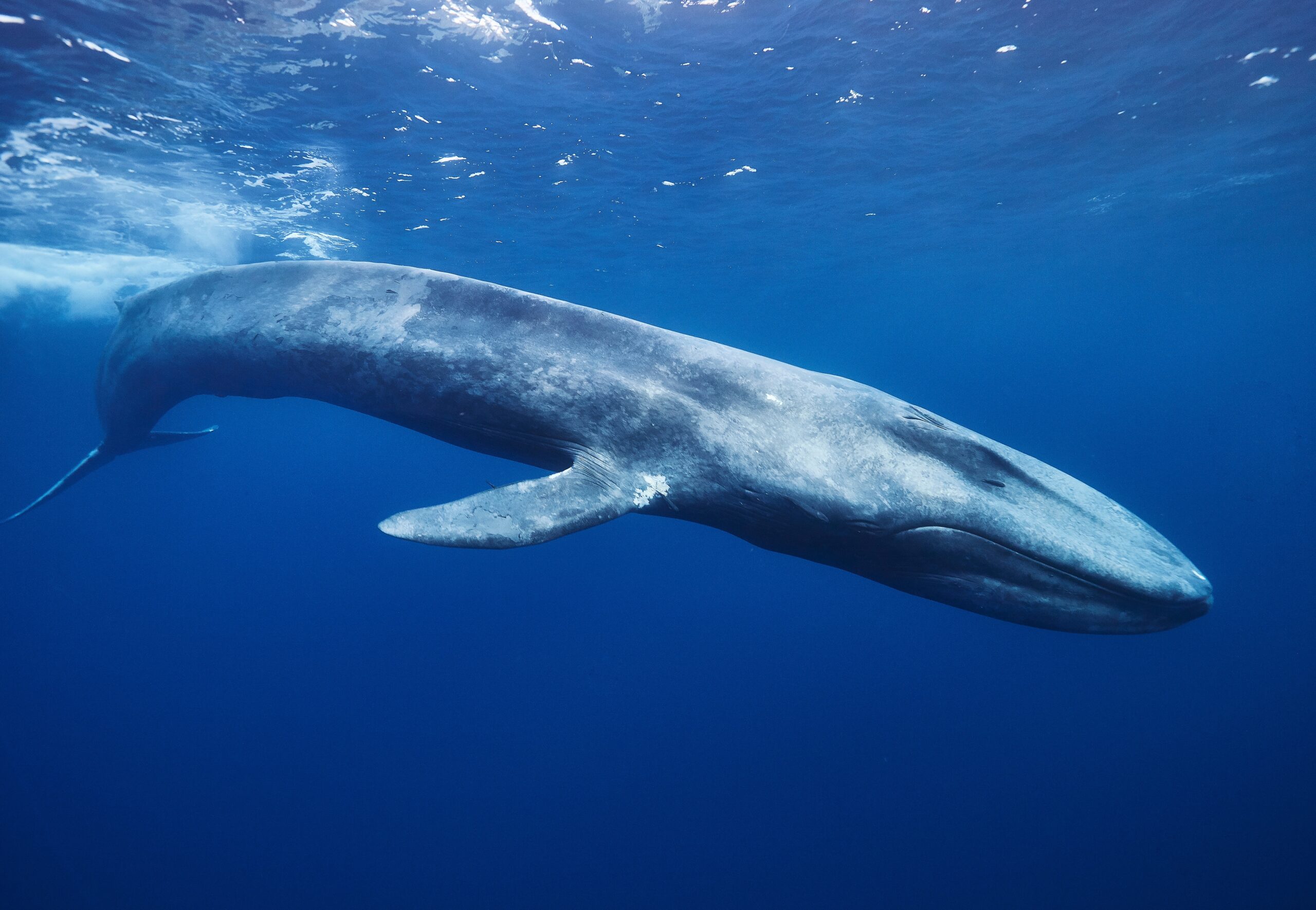
A remarkable discovery in the south-eastern Indian Ocean has revealed what scientists believe is the oldest, deepest, and most extensive whale graveyard ever found. The site contains hundreds of whale fossils, some dating back more than five million years, offering a rare glimpse into life and death in one of the planet’s most extreme environments.
Whales that die and sink to the seabed create what scientists call “whale falls.” While these underwater resting places are relatively common, most known whale falls have been found at depths of less than 4,000 metres. This newly discovered graveyard is far more extraordinary, stretching across hundreds of miles of ocean floor and reaching depths of over 7,000 metres.
What makes the discovery even more fascinating is that the researchers found not only ancient fossils but also modern whale carcasses in advanced stages of decomposition, each supporting thriving communities of marine life.
Dr Giovanni Bianucci of the University of Pisa, one of the study’s co-authors, said the findings highlight how much remains unknown about the deep ocean. According to him, these remote environments are home to species and ecosystems that science has yet to identify, showing that our understanding of Earth’s biodiversity is still incomplete.
He also noted that the discovery demonstrates life’s remarkable ability to adapt. Despite the crushing pressure, total darkness, and harsh conditions of the deep sea, diverse organisms continue to survive and evolve. The research has also provided valuable insights into elusive species such as beaked whales, which remain among the least understood marine mammals.
The whale graveyard was discovered by an international team of scientists from China, Italy, and New Zealand. Using a deep-sea submersible, they explored the Diamantina Fracture Zone, a region of trenches and ridges in the south-eastern Indian Ocean. This geological feature was formed between 50 and 60 million years ago when Australia and Antarctica gradually drifted apart.
During their investigation, the researchers located whale fossils at depths of up to 7,002 metres, close to the deepest point of the fracture zone. Over the course of 32 dives, they identified 485 fossil sites along with five modern whale falls.
The sites were found along a 1,200-kilometre stretch of seabed, leading researchers to suggest that the area may represent a previously unknown “whale-fall supercorridor” — a vast route where whale remains have accumulated over millions of years.
Among the discoveries was the skeleton of an Antarctic minke whale measuring five metres in length. The team also uncovered fossils from extinct whale species, including a 5.3-million-year-old skull belonging to the beaked whale species Pterocetus benguelae. Another fossil skull was identified as belonging to an entirely new species, which researchers have named Pterocetus diamantinae.
The decaying whale remains were far from lifeless. Scientists observed a rich ecosystem of creatures feeding on and inhabiting the carcasses, including crustaceans, molluscs, brittle stars, and bone-eating worms. Many of these organisms may represent species that have never been documented before.
Professor Jon Copley, an ocean exploration expert from the University of Southampton who was not involved in the study, described the discovery as both rare and exciting. He noted that it is unusual to find such a dense concentration of whale skeletons and fossils in a single location, particularly at such extreme depths.
Whale falls act like isolated islands on the ocean floor, providing food and shelter for deep-sea species, including some related to organisms that live around hydrothermal vents. Unlike underwater volcanic vents, however, whale falls are incredibly difficult to locate because there is no reliable way to detect them remotely.
One of the biggest mysteries surrounding the site is the variety of whale species represented there. The graveyard contains remains from both shallow-diving filter feeders, such as minke whales, and deep-diving hunters like beaked whales.
Researchers believe the location may have served multiple purposes over time. It could have been part of a migration route for feeding whales while also providing ideal hunting grounds for species that dive deep in search of squid. However, the extreme depths and rugged terrain of the fracture zone may have pushed some whales beyond their limits.
The discovery has been compared to the opening chapter of a much larger story. Scientists believe the whale graveyard still has many secrets to reveal, and future expeditions could uncover even more fossils, species, and insights into the hidden world of the deep ocean.
For now, the Diamantina whale graveyard stands as one of the most extraordinary marine discoveries ever made, reminding us that some of Earth’s greatest mysteries still lie far beneath the waves.