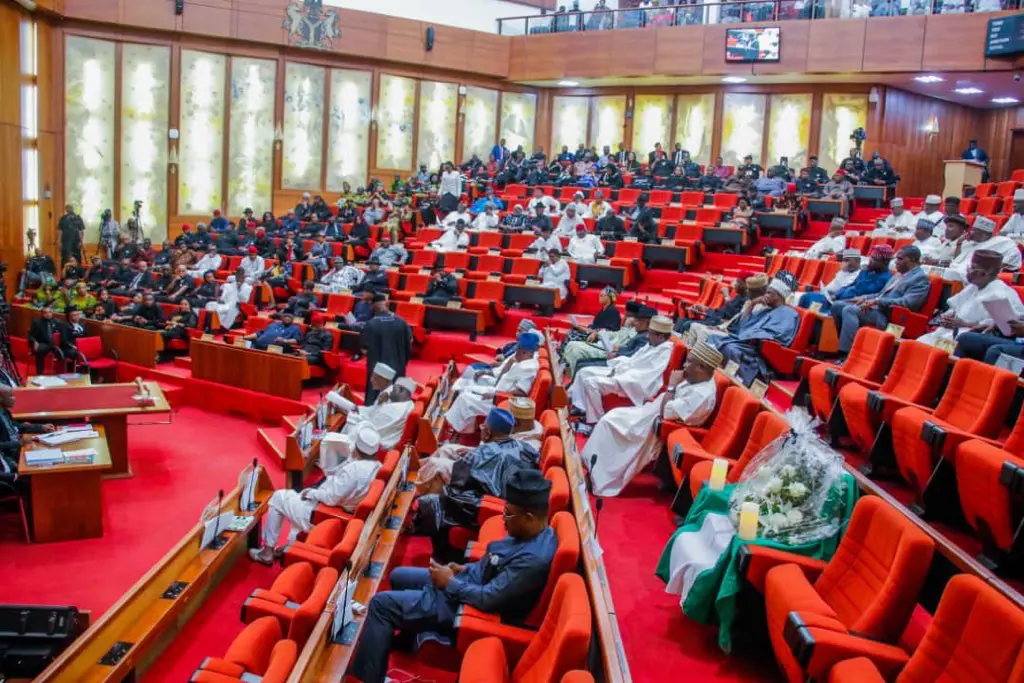
Senate Leader Opeyemi Bamidele has revealed that the National Assembly will consider a proposal for a single six-year term for presidents and state governors as part of broader constitutional reforms aimed at improving governance in Nigeria.
Speaking on the floor of the Senate, Bamidele explained that the proposal is intended to allow elected leaders to focus entirely on governance without the distraction of seeking re-election. According to him, the current system often forces office holders to begin political calculations for a second term shortly after assuming office.
He argued that a single six-year tenure would encourage leaders to devote their energy to delivering results from their first day in office, knowing they have only one opportunity to serve.
Bamidele also defended the National Assembly’s decision to reject calls for a fresh investigation into military spending in the fight against terrorism. He maintained that conducting a public probe while security operations are ongoing could undermine national security efforts and affect the morale of troops operating under difficult conditions.
According to the Senate Leader, the legislature already exercises oversight through its defence-related committees, which regularly review military budgets, inspect procurements, and monitor spending. He expressed confidence that security agencies are making meaningful progress in combating terrorism and other forms of criminality across the country.
Addressing criticisms that the Senate has acted as a rubber stamp for the executive arm of government, Bamidele rejected the allegation. He stated that the Senate deliberately chose a collaborative approach with President Bola Tinubu’s administration to advance reforms and address pressing national challenges.
He noted that many disagreements between the legislature and the executive were resolved through consultations rather than public confrontations, stressing that legislative independence should not be judged solely by visible conflicts. He added that this cooperation helped facilitate important reforms, including tax legislation and reviews of policy proposals before they reached the Senate floor.
Meanwhile, the Aare Ona Kakanfo of Yorubaland, Iba Gani Adams, has renewed his call for the establishment of state and local government police forces to address worsening insecurity across the country.
Speaking during a virtual international conference titled Changing Face of Insecurity in Yorubaland, organised by Yoruba One Voice (YOV), Adams argued that Nigeria’s centralised policing structure is no longer sufficient to tackle growing and localised security threats.
He said decentralised policing would enable states to respond more effectively to security challenges, strengthen intelligence gathering, and improve trust between law enforcement agencies and local communities.
Adams expressed particular concern over the recent rise in violent crimes in the South-West, including the mass abduction of 39 students and seven teachers from three schools in Oyo State on May 15, 2026. He also called for stronger collaboration between government agencies and private security organisations.
The conference’s keynote speaker, retired Major General Ishola Williams, said Nigeria’s biggest challenge is the lack of public safety rather than the absence of security structures. He pointed out that several regional security outfits already exist, including the Amotekun Corps in the South-West and the Lagos Neighbourhood Safety Corps, but noted that many of them lack the resources and intelligence capabilities needed to effectively combat heavily armed criminal groups.
Williams further urged citizens to demand greater accountability from state governors regarding the use of security votes and called for stronger unity among Yoruba traditional rulers in addressing insecurity at the grassroots level.
In a related development, Open Alliance, a coalition of civil society organisations, has called for transparency, accountability, respect for human rights, and active citizen participation in discussions surrounding the proposed creation of state police.
The coalition made the call following a stakeholder dialogue held in Abuja on May 13, 2026, where civil society groups, governance experts, legal practitioners, security professionals, development partners, media representatives, and policymakers examined the prospects and challenges of devolving policing powers to the states.
Participants acknowledged the growing security concerns facing Nigeria, declining public confidence in law enforcement institutions, and increasing demands for security sector reform. While many agreed that state policing could contribute to improved security, they also highlighted unresolved issues relating to governance structures, funding mechanisms, accountability systems, and institutional capacity.
Stakeholders emphasised that the success of any policing arrangement depends not only on its structure but also on effective oversight and strong safeguards for citizens’ rights. They stressed that state police should form part of a broader strategy to improve public trust, service delivery, and the legitimacy of law enforcement institutions.
As constitutional amendment discussions continue, Open Alliance urged policymakers to adopt evidence-based approaches, encourage inclusive consultations, and establish robust accountability frameworks to ensure that any future policing system remains transparent, effective, and responsive to the needs of Nigerians.