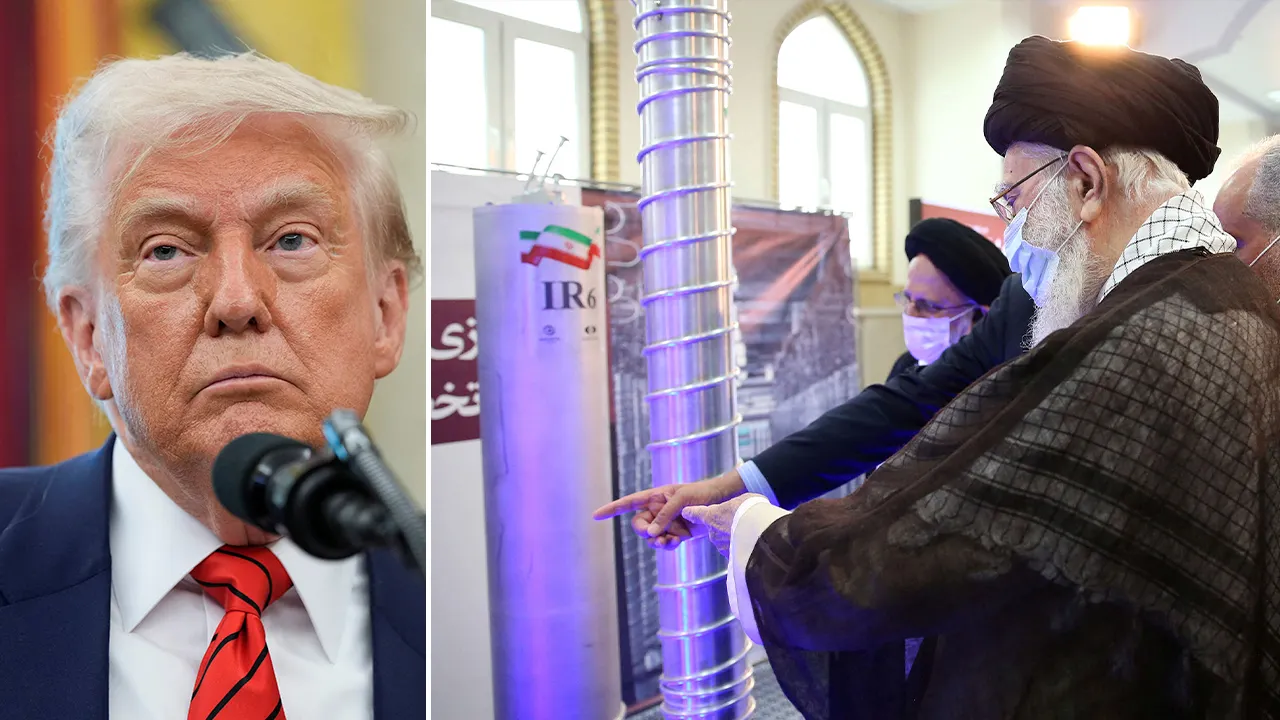
Talks between Iran and the United States aimed at strengthening a fragile interim agreement to end the ongoing conflict are set to begin in Switzerland. However, the negotiations face significant challenges, including Iran’s decision to keep the Strait of Hormuz closed in protest over President Donald Trump’s failure to pressure Israel into ending its military operations in Lebanon.
US Vice-President JD Vance, who is leading the American delegation, said the discussions would now include the escalating conflict in Lebanon. The original agenda focused on reopening the Strait of Hormuz, easing US sanctions on Iranian oil exports, and releasing Iranian assets frozen overseas.
Vance arrived early Sunday at the Qatari-owned Bürgenstock resort in Switzerland, where he is expected to meet Iranian officials for the second time since the conflict began several months ago. He previously held direct talks with Iranian representatives in Islamabad.
The Iranian delegation is headed by Parliament Speaker Mohammad Bagher Ghalibaf. The inclusion of Iran’s deputy oil minister and central bank governor highlights Tehran’s priority of negotiating sanctions relief and economic recovery.
Under the memorandum of understanding released last week, the first requirement is a ceasefire across all fronts, including Lebanon, where clashes between Israel and the Iranian-backed Hezbollah movement have intensified.
Speaking ahead of the talks, Vance expressed cautious optimism.
“I think we’re going to hopefully make progress on the nuclear issue and on the Lebanon ceasefire issue,” he said. “Those are the two main areas we’ll be focusing on.”
He added that his participation in the negotiations would likely last only “a day or two.”
According to Switzerland’s foreign ministry, delegations from the United States and Iran, along with mediators from Pakistan and Qatar, are already at the resort. Formal discussions are expected to begin later on Sunday.
Iranian Foreign Ministry spokesperson Esmail Baghaei said Tehran would first meet separately with the mediators before joining a four-party meeting with the United States later in the day.
The full consequences of Iran’s decision to keep the Strait of Hormuz closed remain uncertain. Last week, Trump warned that global supplies of refined oil could be exhausted within four weeks if the passage remained blocked. He argued that his decision to lift restrictions on Iranian oil ports had prevented a worldwide recession by facilitating the reopening of the strategic waterway.
At the same time, Trump is facing growing criticism from pro-Israel supporters in the United States, particularly over remarks made by both him and Vance targeting Israeli Prime Minister Benjamin Netanyahu.
Back in Tehran, the negotiations have sparked a fierce political debate. Supporters of diplomacy argue that the talks offer a path to stability, while hardliners insist that any agreement with Washington is futile because the United States cannot be trusted.
Mahmoud Nabavian, a long-time critic of negotiations and a member of the delegation that travelled to Islamabad, claimed the current talks differ significantly from the conditions originally approved by Iran’s Supreme Leader, Mojtaba Khamenei.
Last week, Khamenei publicly stated that he opposed the negotiations but had allowed them to proceed out of respect for President Masoud Pezeshkian, provided the interests of the so-called “Axis of Resistance,” particularly Hezbollah, were protected.
Nabavian’s appearance on state television was abruptly cut short, and authorities later announced that legal action would be taken against him. Reports also suggested that a senior official at the state broadcaster IRIB was preparing to resign.
During the interview, Nabavian claimed that Khamenei had sent three separate directives limiting the scope of negotiations. According to him, one letter concerning the Islamabad talks stated that the outcome of the discussions differed substantially from the conditions originally set for their legitimacy.
He also claimed that Khamenei had insisted on maintaining Iran’s exclusive control over the Strait of Hormuz, including collecting transit fees from vessels, restricting hostile ships, and directing the resulting revenues toward the public, families of fallen soldiers, and military veterans.
Such accusations—that Iranian negotiators may be disregarding the Supreme Leader’s instructions—are considered extremely serious within Iran’s political system.
President Pezeshkian attempted to calm tensions, insisting that the memorandum signed with the United States overwhelmingly benefits Iran.
“All the provisions of the agreement are in our favour,” he said. “The results of these negotiations will soon become clear.”
He argued that Trump’s position had shifted dramatically, noting that activities previously opposed by Washington were now being recognised as legitimate rights of the Iranian people. He also pointed to the expected release of $6 billion in Iranian funds currently held in Qatar.
Pezeshkian further suggested that Netanyahu’s opposition to the negotiations was evidence that the talks were benefiting Iran.
He stressed that the only significant American demand was a commitment that Iran would not pursue nuclear weapons.
“This is something our leaders have said repeatedly—we do not want atomic bombs,” he said. “The United States asked us to put that in writing and sign it, and we did.”
Despite these assurances, scepticism remains strong within Iran’s political and military establishment.
Mohsen Rezaei, a senior military adviser to Khamenei, warned on social media that “the enemy has shown itself to be a promise-breaker” and urged caution against excessive optimism.
Similarly, Hojjatoleslam Sadeghi, the Supreme Leader’s representative to the Islamic Revolutionary Guard Corps, said Iran’s fundamental opposition to Western powers would remain unchanged.
“We are not negotiating to reconcile,” he said. “We are negotiating to secure our rights.”
Meanwhile, hopes for peace in Lebanon remain uncertain. Although Washington announced a renewed ceasefire on Friday, fresh clashes erupted the following day between Israeli forces and Hezbollah fighters, with both sides accusing each other of violating the truce.
Citing what it described as a US “breach of contract,” Iran’s central military command subsequently announced that the Strait of Hormuz would remain closed to maritime traffic, further complicating efforts to reduce tensions across the region.