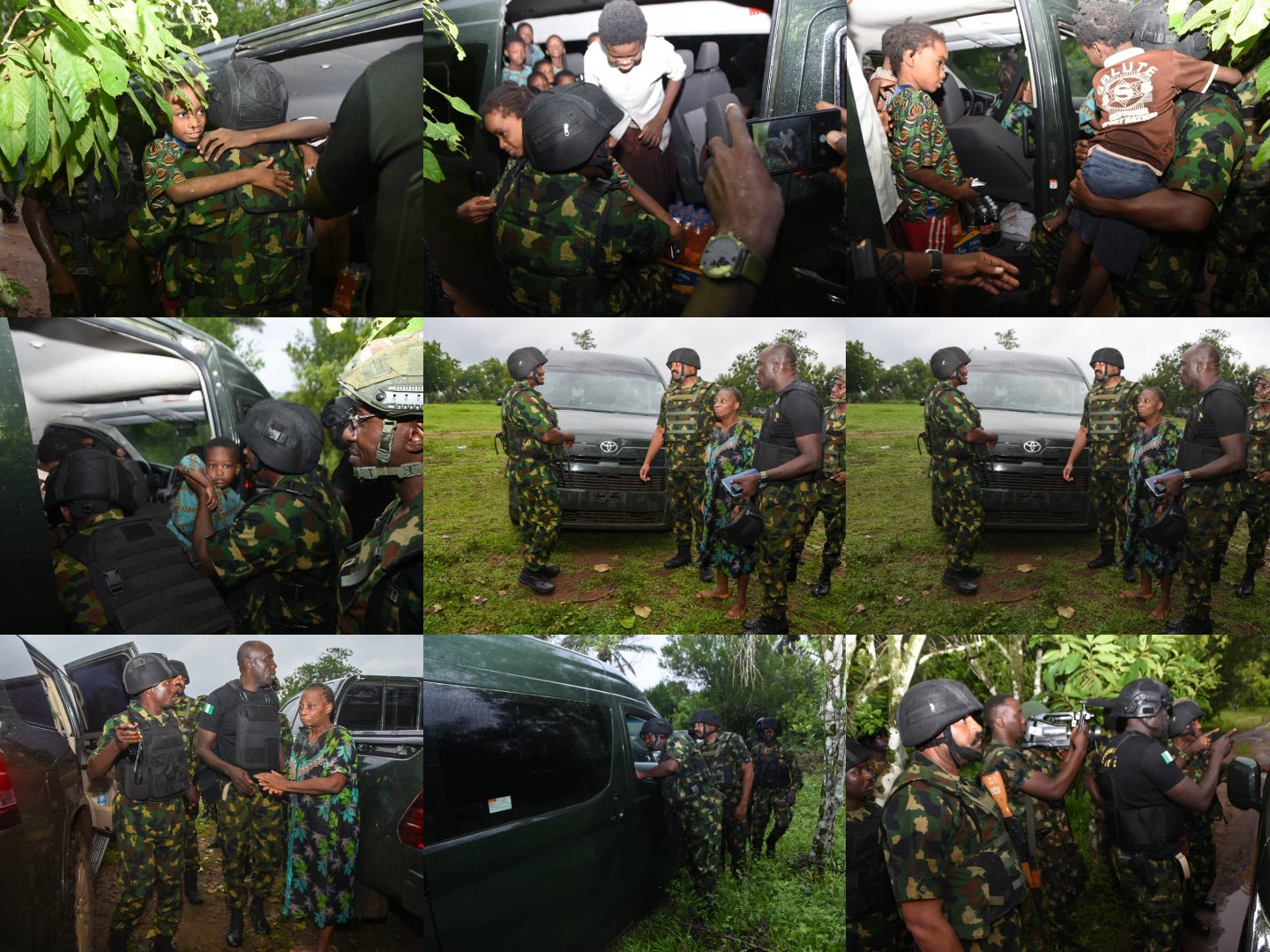


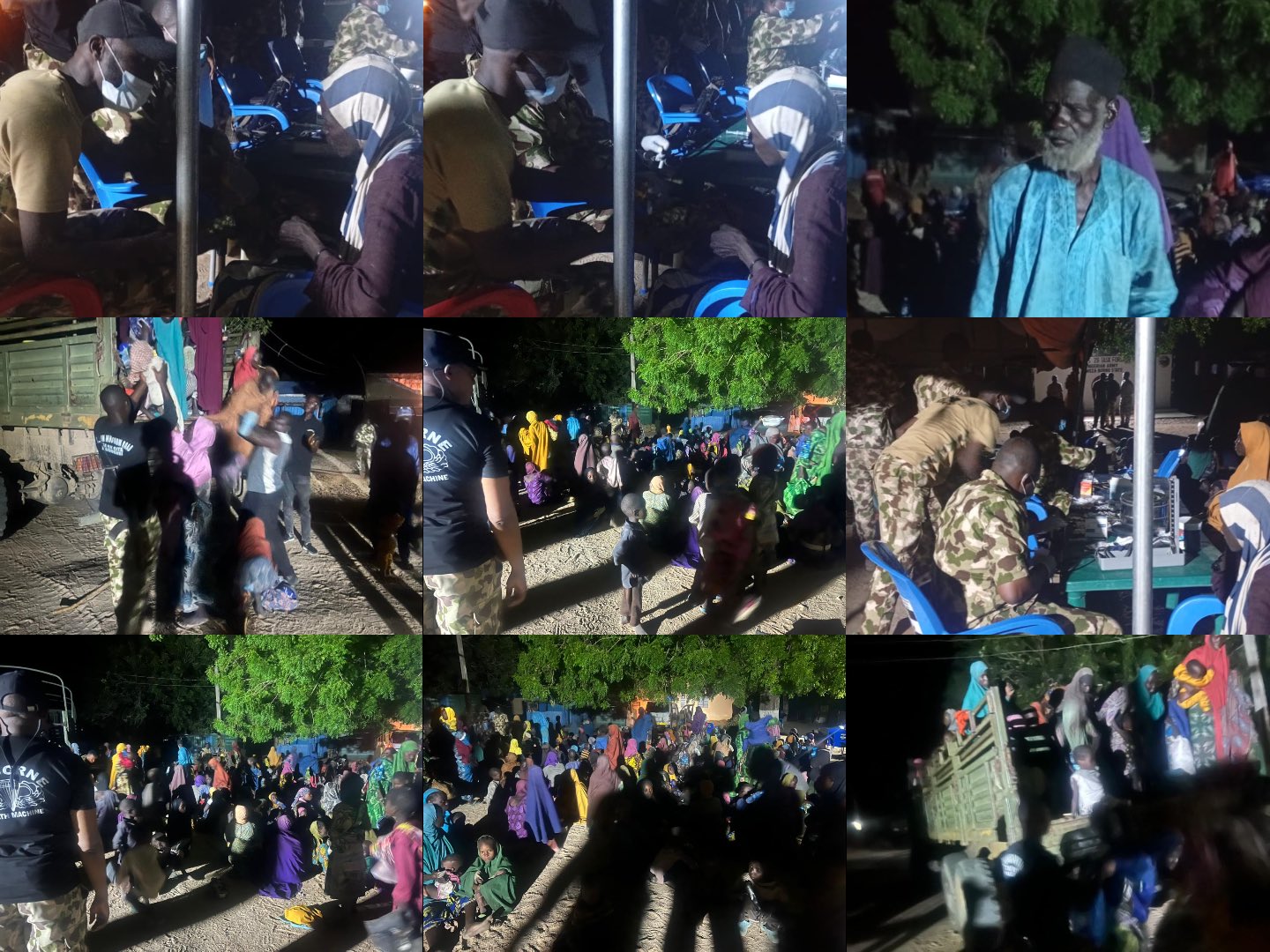
In a landmark counterterrorism success, troops of the Joint Task Force (North East), Operation HADIN KAI (OPHK), have rescued 360 abducted civilians from a notorious Jama’atu Ahlis Sunna Lidda’awati wal-Jihad (JAS) stronghold hidden deep within the rugged Mandara Mountains of southern Borno State.
The operation, described by military sources as one of the most significant hostage rescue missions in recent years, was carried out by Special Forces and troops of Sector 1 following weeks of meticulous intelligence gathering, surveillance, and operational planning. The rescued victims—comprising men, women, and children—had been held in captivity under extremely harsh conditions after being abducted from several communities, particularly within the Ngoshe axis.
Military authorities said the success of the operation highlights the growing effectiveness of Operation HADIN KAI in dismantling terrorist networks, protecting vulnerable communities, and denying insurgents freedom of movement across the North-East theatre.
According to military sources, the mission was launched after security agencies received credible intelligence from multiple channels identifying the exact location of the hostages and revealing the existence of a well-organised insurgent support structure sustaining the enclave. In response, intelligence units initiated an extensive target development process that combined Human Intelligence (HUMINT), Signals Intelligence (SIGINT), and continuous Intelligence, Surveillance, and Reconnaissance (ISR) activities.
Using information gathered from unmanned aerial systems and long-range reconnaissance patrols, commanders were able to build a detailed picture of the operational environment, including the terrain, insurgent positions, defensive structures, movement patterns, and the condition of the captives. This intelligence-led approach enabled troops to accurately assess the target area, identify weaknesses within the terrorist network, and minimise risks to the hostages during the rescue operation.
A critical turning point came when intelligence operatives successfully penetrated the insurgent network through carefully managed human assets. These sources provided timely and actionable information on the precise location of the abductees, the positions of key insurgent leaders, internal security arrangements, and planned relocation routes for the captives.
At the same time, coordinated information and psychological operations reportedly sowed confusion and mistrust among members of the terrorist group, weakening internal cohesion and disrupting command and control structures. The resulting intelligence advantage gave military planners exceptional situational awareness and allowed them to shape the battlefield well before the commencement of the assault.
The successful rescue of all 360 abductees without major reported casualties among the hostages marks a significant achievement in ongoing efforts to restore security and stability across the North-East. Security analysts view the operation as a clear demonstration of the increasing sophistication of intelligence-driven military operations and the growing capability of Operation HADIN KAI to strike deep into previously inaccessible terrorist strongholds.
Military authorities reaffirmed their commitment to sustaining offensive operations against terrorist elements while ensuring the protection of civilians and the safe return of those still being held in captivity.